• Corporate News
  • People

Nefab India is Great Place to Work-Certified™

We are happy to announce that Nefab India is Great Place to Work-Certified™.

The Great Place to Work® Certification Program is a rigorous work culture assessment process that certifies companies that work towards building a High-Trust, High-Performance Culture™. For an organization to get certified, 70% or more of its employee respondents should rate the organization as a great workplace by Great Place to Work® Institute. The criteria include leadership, respect, fairness, camaraderie, and trust in the workplace.
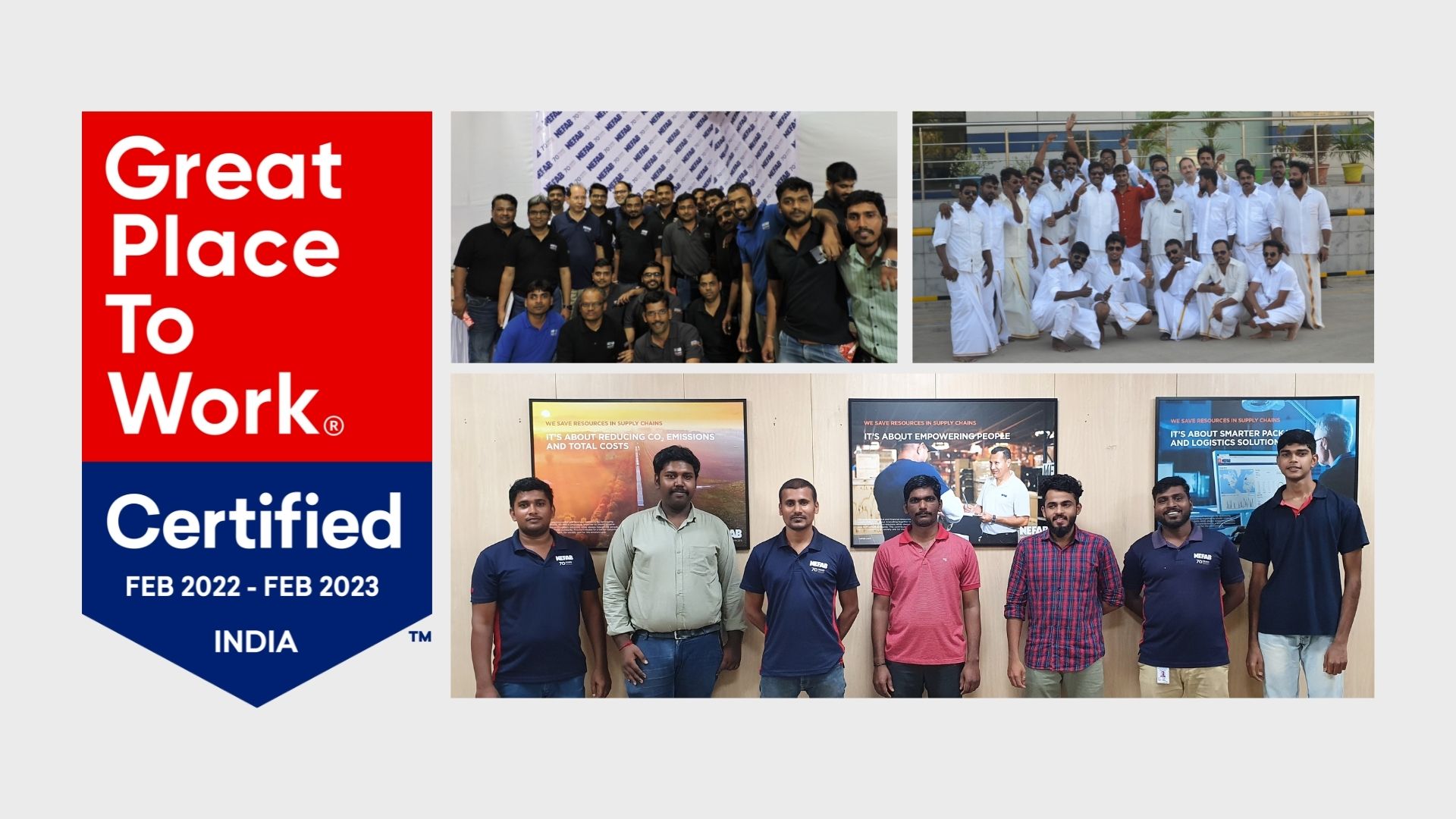
“At Nefab we consider people our main asset. We respect each other, the environment around us, and ethical ways of doing business. We are happy for this recognition which mirrors our core values and people culture“, says Revindra Shenoy, Managing Director, Nefab India.

View the certificate here
Learn more about working at Nefab:
https://www.nefab.com/en/careers/

Read our Code of Conduct: https://www.nefab.com/en/sustainability/code-of-conduct/

Visit the Nefab India website: https://www.nefab.com/en/india/

Our latest news & insights
  • 2026.02.16 Corporate News

    The Full Package – An Interview with Patric Vestlund and Darrell Tiedeman

    The latest issue of Business Focus magazine features an in-depth article where you can read more about Nefab’s deepening commitment to innovation, particularly in the realm of environmentally friendly returnable solutions.

  • 2026.02.09 LiB and E-mobility

    What’s the Best Packaging for Lithium-Ion Battery Transport?

    As production volumes increased and automation became more common in battery plants, packaging had to do more than just protect parts in transit. The focus shifted to solutions that could hold their shape, last longer in reuse loops and keep performing reliably trip after trip.

  • 2026.02.03 Corporate News

    Optimized Foam Inserts for Cleanroom-bound Products

    Our customer was using a legacy packaging design for the RPS (Remote Plasma Source) Adapters that was inefficient and costly. Their traditional "coffin-style" foam inserts consumed excess material, leading to higher expenses, more waste, and a larger carbon footprint. By re-engineering the packaging, we developed a streamlined, resource-efficient solution that provided the necessary protection while significantly reducing material use and volumetric weight.