- News & Insights
- 2025
- Mono-Material Packaging for Carbon Brake Discs
- Customer Cases
- Industries
Mono-Material Packaging for Carbon Brake Discs
A leading aerospace company needed to ship carbon brake discs from Europe to Asia via air freight, prioritizing cost efficiency and environmental responsibility. Through their partnership with Nefab, this customer adopted a fully corrugated, mono-material solution, cutting their CO2 emissions by 36% as well as improving storage, transit, and recycling.
The Challenge: Intuitive and Cost-Optimized Packaging for Carbon Brake Discs in Air Freight
The customer launched a new product line of carbon brake discs for race cars. With no previous packaging solution as reference, Nefab needed to prevent potential issues through smart, intuitive design. This design needed to meet requirements such as:
- Intuitive packing process: All components needed to fit properly in each box with clear handling procedures for workers
- Precise positioning: Brake disks required exact orientation to prevent damage during transit
- Cost optimization: Air freight from Europe to Asia demanded minimal shipping volume and weight
Solution: Innovative Mono-Material Packaging
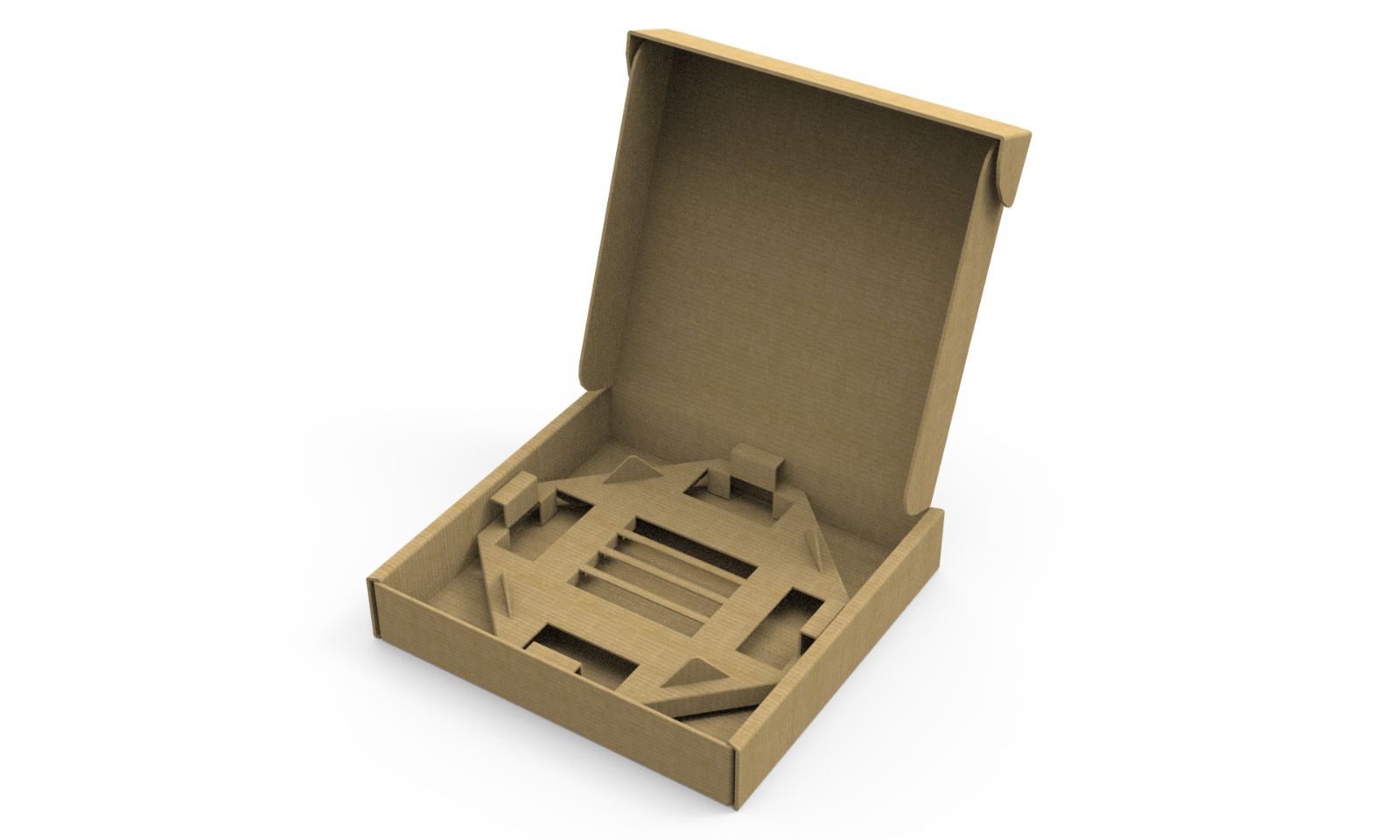
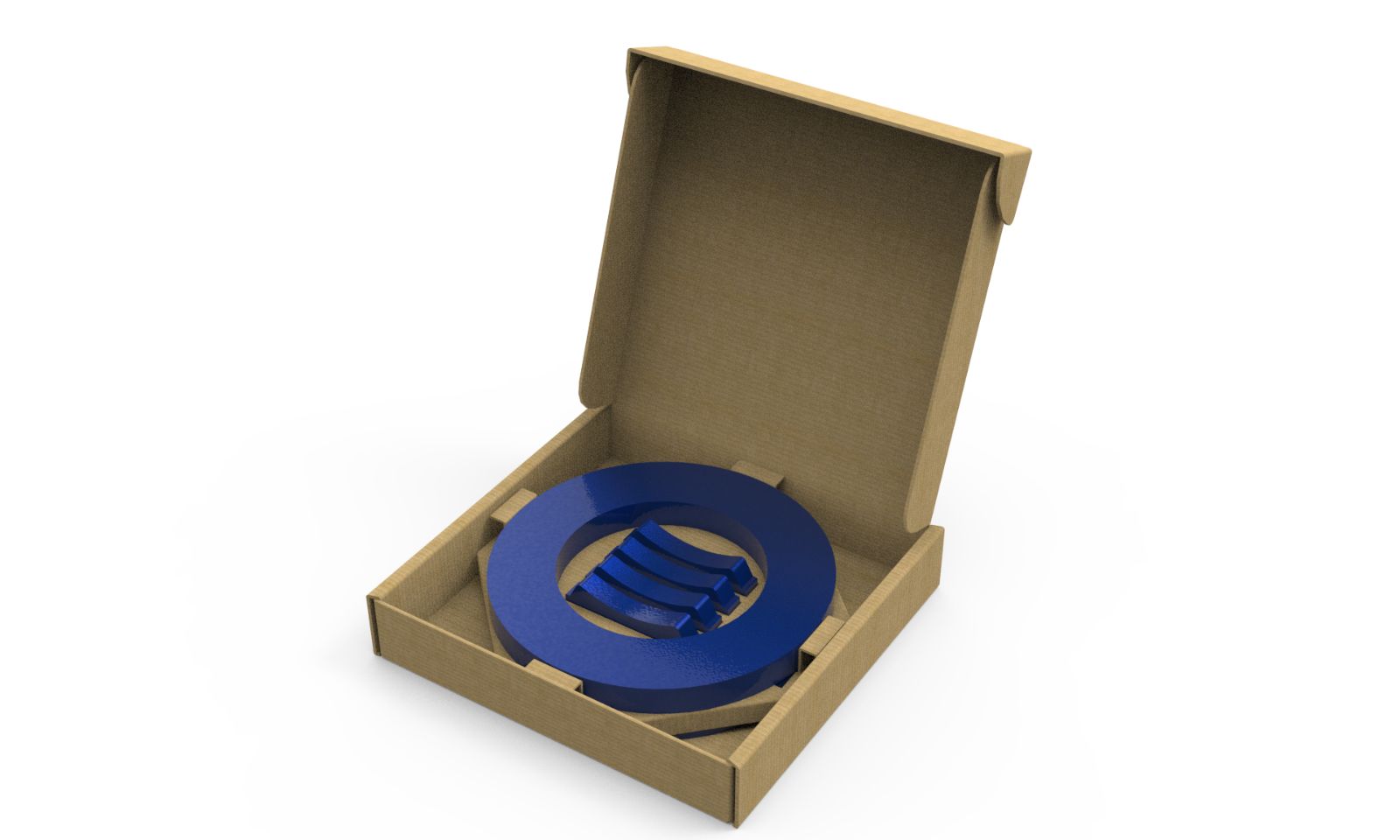
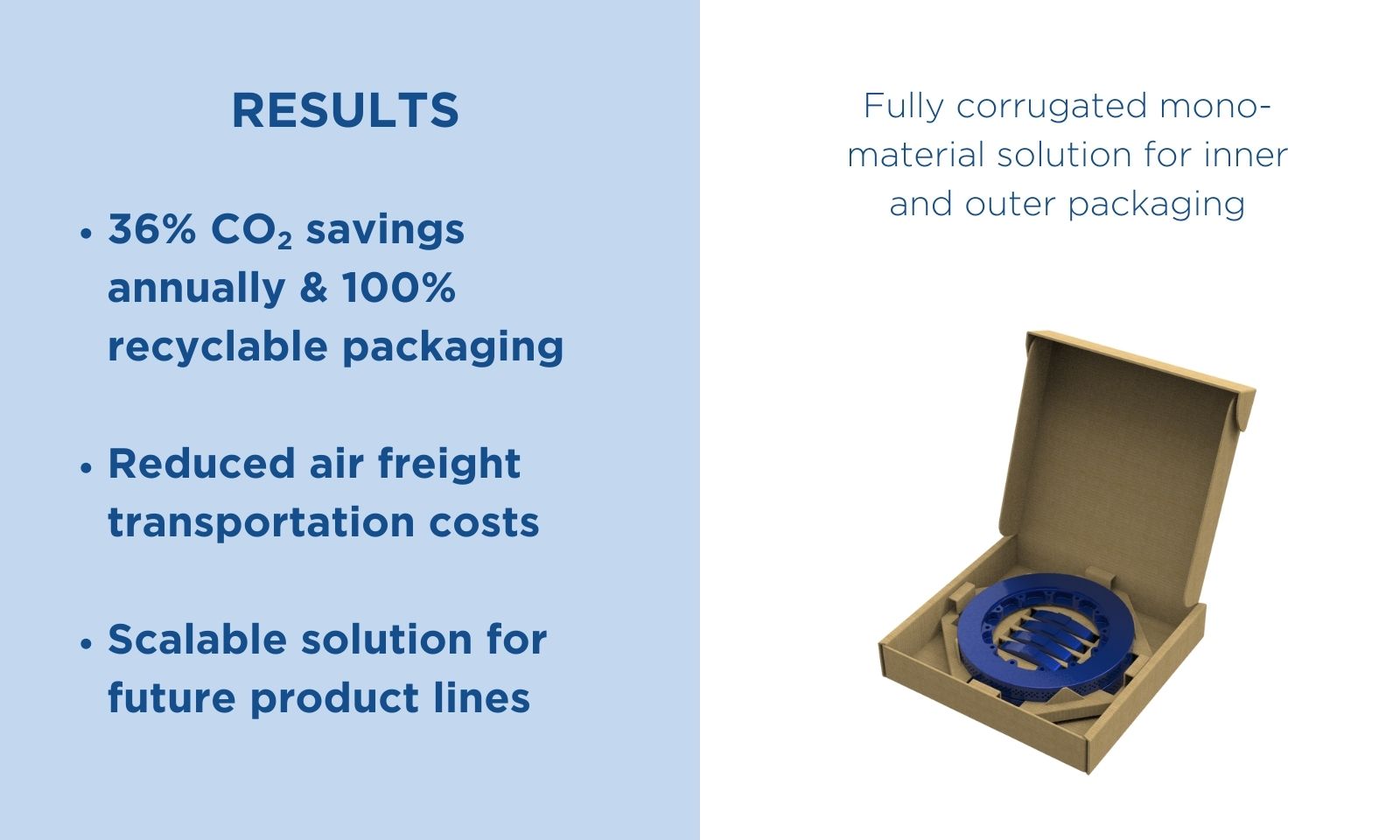
The packaging partner delivered a revolutionary mono-material approach using 100% corrugated materials for both outer and inner packaging components that simplified the recycling flow for end users. This innovative solution was also both lightweight and foldable for efficient storage and transport.
The packaging partner delivered a revolutionary mono-material approach using 100% corrugated materials for both outer and inner packaging components that simplified the recycling flow for end users.
Results: Environmental, Operational, and Strategic Gains
The customer achieved significant improvements across multiple performance metrics. Benefits of this solution included:
- Environmental Impact: 36% CO2 savings annually compared to standard multi-material solutions, and 100% recyclable packaging through single waste stream
- Operational Benefits: Optimal storage conditions through flat-packed design, reduced air freight costs via weight and volume optimization, streamlined logistics with annual bulk delivery, and enhanced worker efficiency through intuitive packing process
- Strategic Advantages: This scalable solution provides an adaptable framework for future product lines
Take the Next Step
Switch to high-performance, recyclable fiber packaging today. Our fully corrugated mono-material design results in 36% CO2 savings annually and improved storage, transit, and recycling. We can help you achieve similar results.
Talk to Our Experts
Learn More About our Solutions for Manufacturing Excellence
Explore more of our smart and sustainable solutions for customers in different industries, and see how we help customers achieve their financial and environmental goals.
Explore the Others Industries Solution Page
Discover comprehensive packaging and logistics solutions designed specifically for a number of different industries.
Related Industry Customer Cases
Additional Resources