Across Europe, the Packaging and Packaging Waste Regulation (PPWR) requires packaging to meet essential requirements related to how it is manufactured, what is it made of, and whether it can be reused and recovered. The regulation applies to all packaging placed on the EU market as well as waste generated from it2 . Producers must ensure their packaging meets recyclability criteria and provide accurate data on sustainability performance, material composition, and traceability3 .
At the same time, Extended Producer Responsibility (EPR) schemes continue to expand globally, shifting the financial and operational responsibility for packaging waste back onto producers. Packaging is also becoming increasingly relevant for climate disclosures, particularly under the EU’s Corporate Sustainability Directive4. For many companies, this shift means packaging information that once was scattered across suppliers, plants, and spreadsheets now needs to be consolidated, verified, and reported across multiple markets.
What unites the regulatory developments?
At the core, they all point to the same shift: packaging data must now be measurable, verified and comparable across markets. Companies are expected to regularly collect and verify packaging information that, until recently, was rarely tracked centrally. Material composition, recyclability rates, volumes placed on the market, recycled content, and lifecycle emissions: information once treated as operational detail is now becoming regulated disclosure with real compliance consequences.
Why is global packaging compliance so complex?
Regulatory tightening is only part of the problem. Most global packaging portfolios did not evolve as a single, coordinated system. Instead, they were developed locally to solve practical needs e.g. protecting products, improving freight efficiency, or meeting regional cost targets. Over time, this created a wide mix of materials, specifications, and supplier documentation standards across regions.
At the same time, regulatory requirements are far from harmonized. Fee structures, recycled content targets, labeling rules, and reporting formats vary widely from one market to another. A recent Packaging Insights interview with The Circulate Initiative described this as a “fragmented policy environment,” where differing national and regional rules create operational complexity for companies working across borders5.
When these two realities collide, companies face what can be called “dual fragmentation”: diverse packaging portfolios operating within inconsistent regulatory systems. As reporting requirements tighten, both layers become difficult to manage.
Companies now need to consolidate packaging data across plants, suppliers and countries. Without a clear, portfolio-wide understanding of packaging formats and material flows, compliance quickly becomes reactive, time-consuming and resource-intensive.
Why is visibility critical for packaging compliance?
Companies need a structured overview of what packaging they use, where it flows, how it performs and how it is reported. A portfolio-wide packaging review using consistent criteria across regions provides a baseline for informed decision-making.
What a packaging review reveals:
- Optimization
- Are packaging dimensions aligned with product requirements, or is unnecessary volume increasing freight cost and emissions?
- Small inefficiencies, multiplied across global volumes, affect both carbon footprint and cost. Packaging designs validated through lifecycle assessment can reduce environmental impact while strengthening reporting credibility.
- Material strategy
- Do complex, multi-material formats increase waste and consequently EPR fee exposure or reporting complexity?
- Streamlined material structures often reduce both compliance risk and administrative burden.
- Logistics flows
- Do existing transport routes support returnable models?
In stable networks, closed-loop systems reduce waste and improve traceability. In more dynamic networks, packaging-as-a-service models can introduce flexibility while maintaining control over material cycles.
Pooling, for example, is a packaging model where companies rent returnable packaging based on their needs, while the packaging provider manages delivery, collection, cleaning and redistribution. Beyond operational efficiency, centralized management simplifies data consolidation across markets.

Pooling is a packaging model where companies rent returnable packaging as needed, while Nefab manages delivery, collection, cleaning, and redistribution.
Why lifecycle data matters for packaging compliance?
Packaging decisions increasingly need to consider cost, environmental impact, and regulatory requirements from the start, not as an afterthought. This is where lifecycle analysis becomes essential.
By measuring environmental impact of packaging across its entire lifecycle, it provides the data needed for credible reporting. Just as importantly, it allows companies to compare options before implementation, balancing protection, logistics performance, material choice, and compliance implications side by side.When packaging is designed with reporting in mind, disclosure becomes more predictable and risk is reduced.
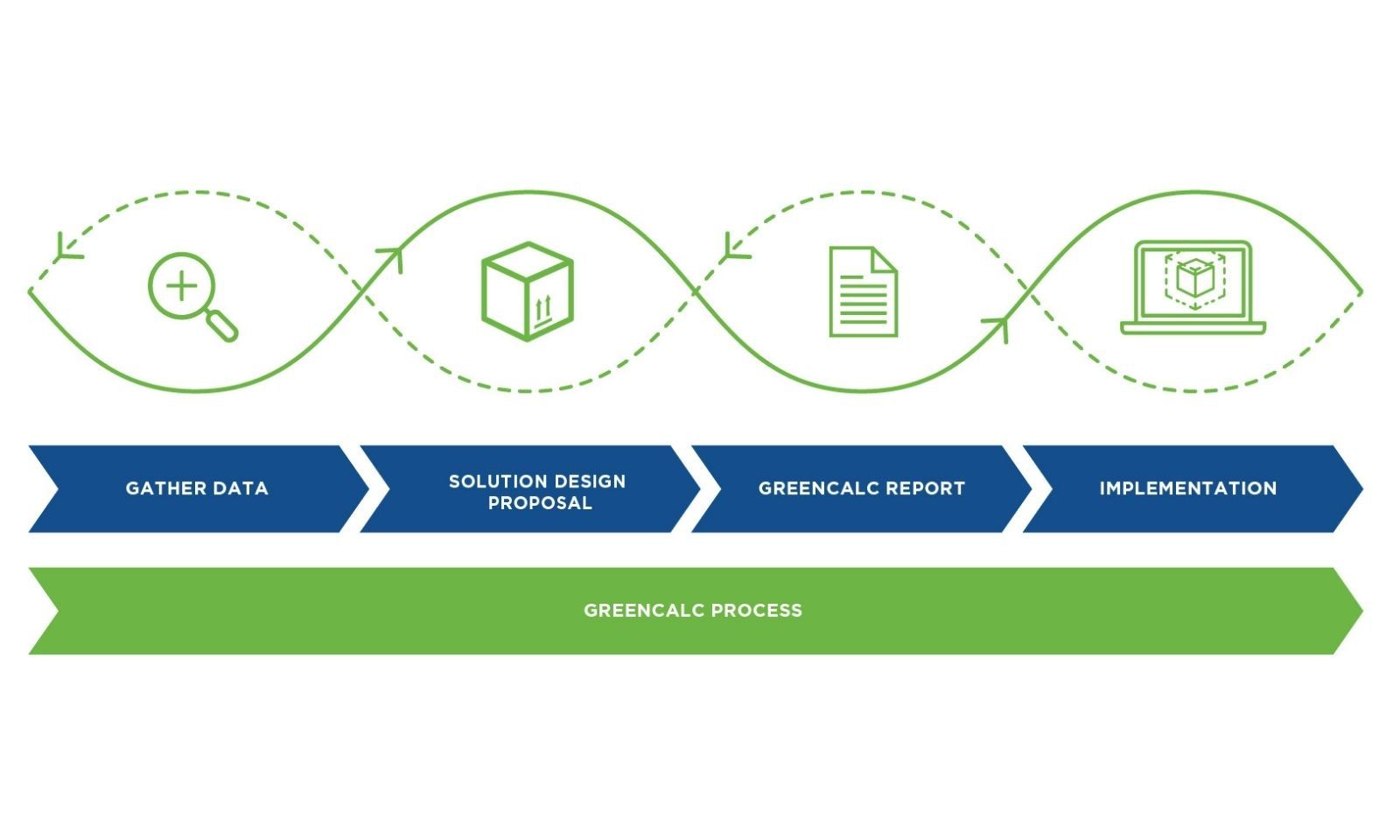
Lifecycle analysis is a data-driven method that measures the environmental impact of packaging across its full lifecycle, providing the verified data needed for compliance and sustainability reporting.
Turning packaging regulation into operational advantage
It is easy to look at new regulations and see extra work. Yet a closer look at packaging systems often reveals inefficiencies that have accumulated over time. What starts as a compliance exercise can turn into an operational reset: simpler material structures, clearer data ownership, and more efficient transport performance.
Regulation is moving toward greater transparency. Companies that treat compliance as a design input rather than a reporting task, will build leaner, more resilient packaging systems and gain a competitive advantage.
We save resources in supply chains for a better tomorrow.
GET IN TOUCH
Contact us to learn more about our smart and sustainable solutions.
LEARN MORE
Sustainable Solutions
Engineered packaging for sustainable supply chains
GreenCalc
Nefab’s own certified calculator measures and quantifies financial and environmental savings in our solutions
Global Supply & Local Services
With over 250 engineers across more than 30 locations, working together in a global network, you can count on us for your next packaging project.