The Challenge: Finding a Safe, Durable Transport Solution Between Factory Sites
The customer is a global automotive supplier that designs and builds powertrain components, with a strong focus on electric vehicle (EV) technologies. They operate multiple production sites where they manufacture battery modules and assemble them into commercial vehicle battery packs.
Before this project, the customer used high-precision stainless steel pallets to feed their battery pack production lines. These metal pallets were expensive and impossible to stack, taking up valuable factory floor space. Worse, moving parts internally required a second set of packaging. Workers had to move battery modules from the manufacturing line using extra ESD (electrostatic discharge) pallets, then physically repack them into the steel racks before they could enter the battery pack line. This constant repacking reduced efficiency. The customer needed a single, UN-certified solution that could safely transport modules between two different factory sites and feed directly into their automated lines.
Nefab's Solution: Clean, Durable Hybrid Packaging Solution
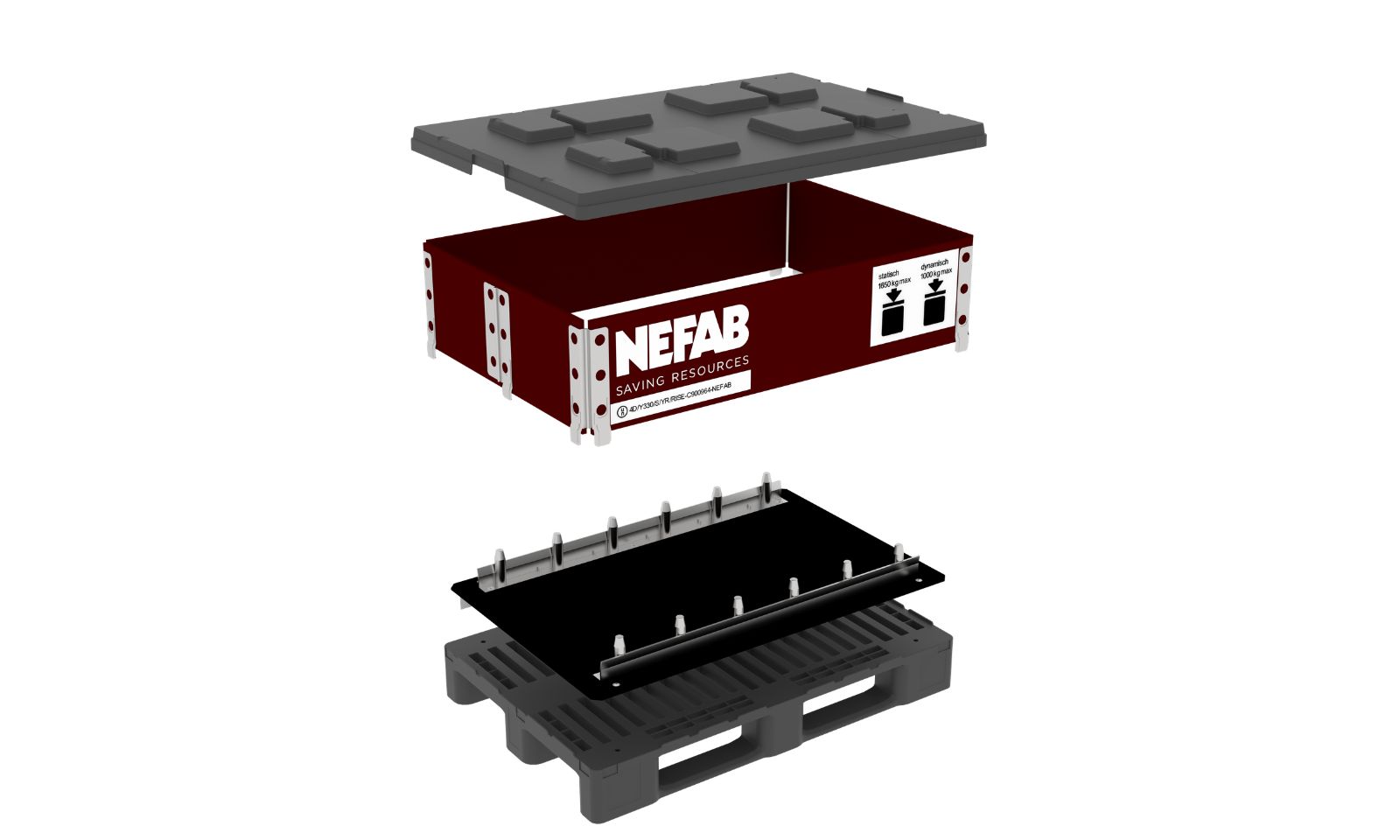
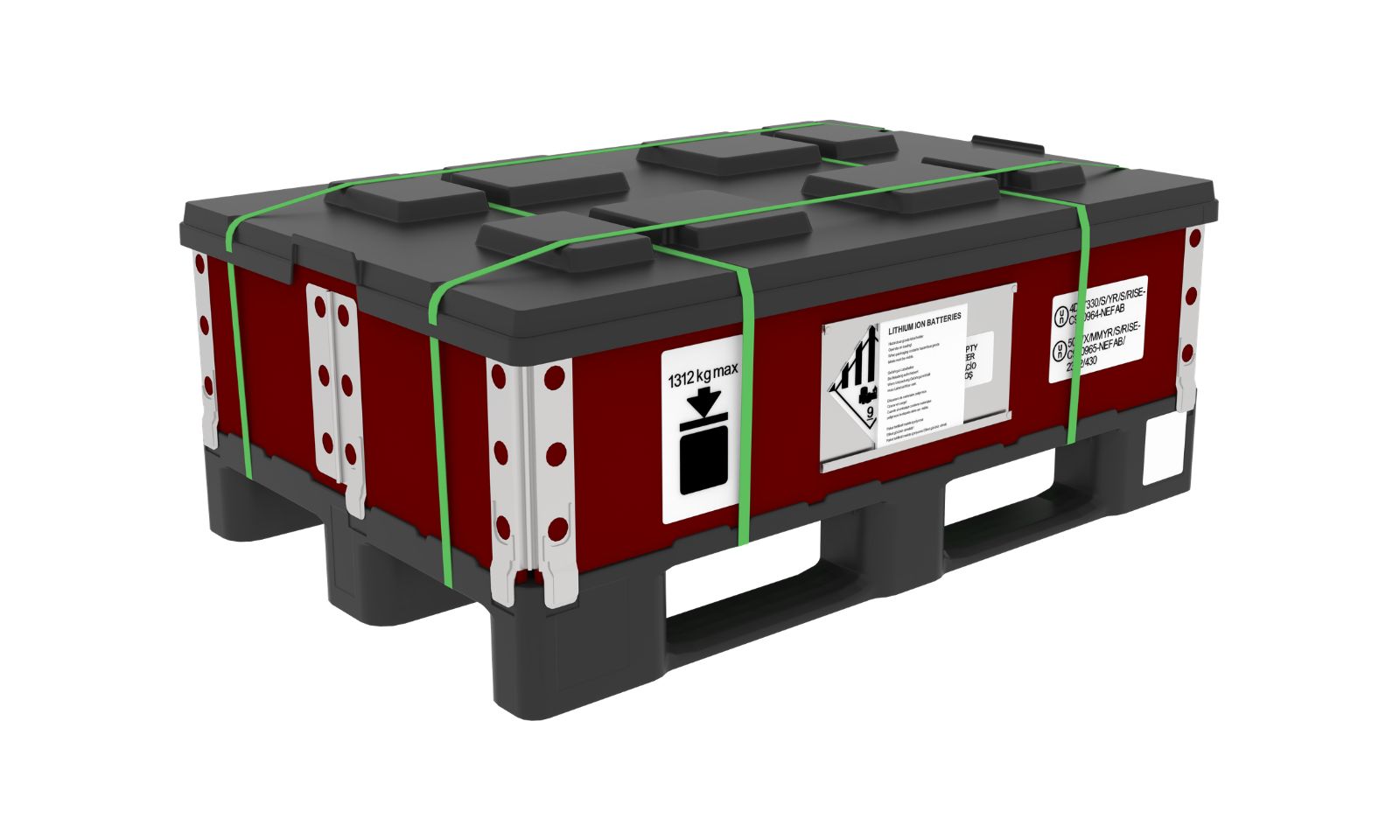
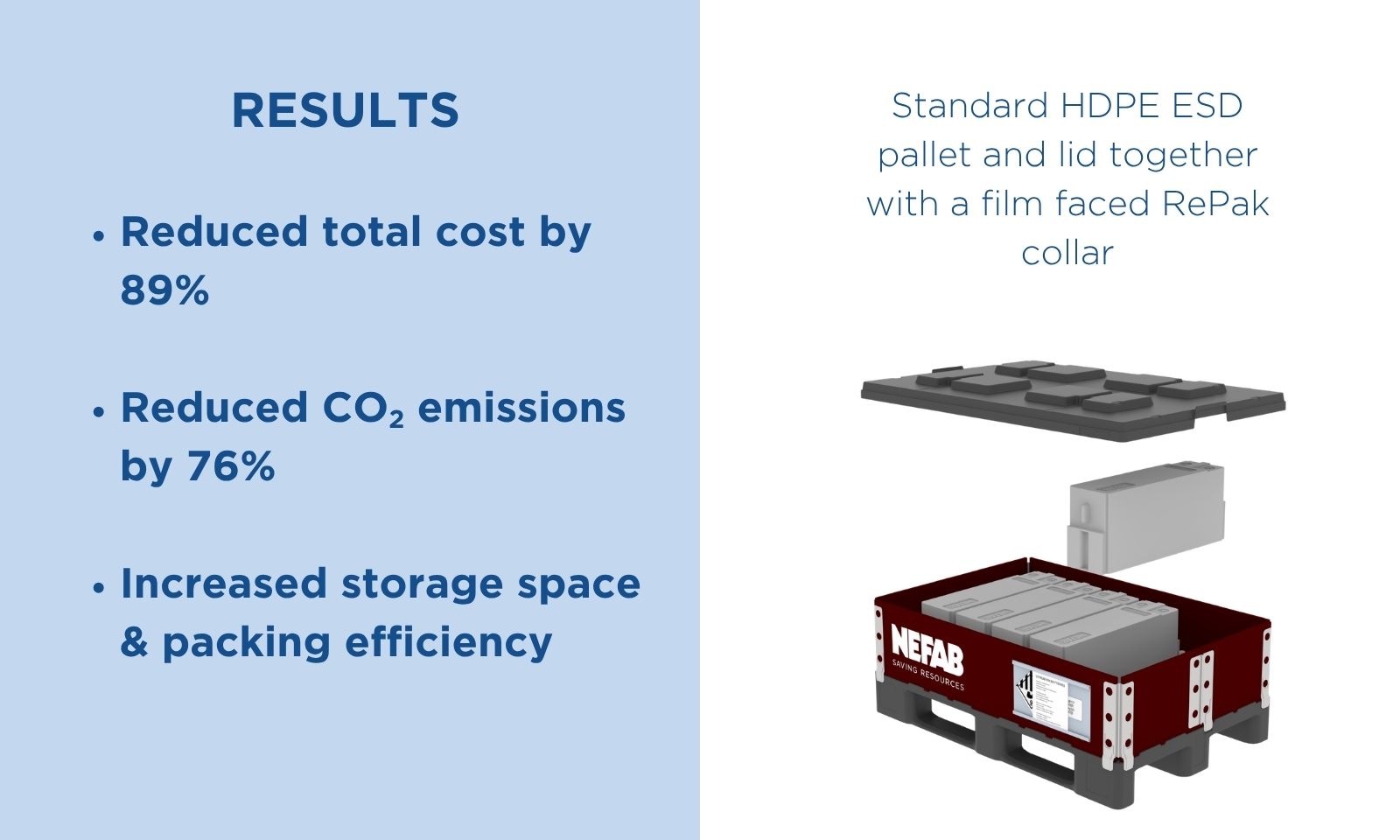
We engineered a clean, durable hybrid solution combining a standard HDPE ESD pallet and lid with a film-faced RePak collar. Because the customer faced a tight deadline, we designed the entire system to require no new tooling.
To hold the sensitive lithium-ion modules securely, we created a custom inner fitting. This fitting used an ESD PE sheet and specialized aluminum brackets with milled positioning cones. We added small pins to the brackets to ensure workers could only place the modules in the correct orientation. If a module was put in backwards, it would sit too high, instantly alerting the handler to the mistake.
During the rollout, the customer faced a separate handling issue on their production line. An unstable handling tool was causing modules to collide as they were placed into the box. We quickly designed and produced temporary plastic guides that hooked over the RePak frame. These simple guides kept the modules separated during insertion, preventing damage and keeping the production line moving smoothly.
The Result: Cost and CO2 Emission Reduction, Increased Storage Space & Packaging Efficiency
The new hybrid packaging system significantly improved the customer’s internal logistics flow. Modules now go straight from the production line into the transport packaging, and then directly to the next factory line without ever being repacked.
Key measurable outcomes include:
- 89% reduction in total packaging costs, saving more than €140,000 annually.
- 76% reduction in CO2 emissions by switching to a lighter, optimized material mix.
- Substantial storage space savings, as the new RePak solution is fully stackable.
- Increased packing efficiency with a single, UN-certified box replacing two separate handling methods.
Ultimately, we replaced a rigid, costly steel system with a flexible RePak and plastic hybrid. By focusing on the exact workflow between two distinct production sites, we removed an entire repacking step while meeting strict automation and UN transport standards.