Telecom networks might be digital but expanding them is a physical operation. Every new radio, antenna, or fiber component deployed during a network upgrade must travel safely through a complex supply chain. The packaging left behind must then be returned, recovered, or recycled.
According to Ericsson’s June 2026 Mobility Report1 global 5G subscriptions reaching 3.1 billion in early 2026 and many sites still awaiting mid-band upgrades, these equipment flows are not slowing down2.
The packaging challenge is therefore not simply how to remove plastic. It is how to match packaging to the journey: consolidating fragmented shipments where possible, using returnable packaging in controlled loops and selecting recyclable materials for one-way deliveries.
The following four practices can help telecom companies improve logistics efficiency and reduce packaging waste without compromising equipment protection.
1. Map the Complete Logistics Flow
Packaging is often designed for an individual product or shipment. In practice, telecom equipment may pass through several suppliers, distribution hubs, and installation sites before reaching its destination.
Answering that question requires looking beyond the individual shipment. When the complete flow is not considered, different packaging formats can enter the same hub; transport capacity may be underused, and equipment may require additional handling or repacking.
Mapping the complete flow helps answer three practical questions:
- Can separate inbound shipments be consolidated?
- Will the equipment remain in the same packaging until it reaches the installation site?
- Can it realistically be returned, or must it enter local recycling streams?
The answers help determine whether the priority should be consolidation, returnable packaging or a recyclable solution for a one-way delivery.
2. Connect Inbound and Outbound Flows
Packaging optimization is not only about materials. It can also involve changing how products from different sources are combined and moved through the supply chain.
At one centralized telecom supply hub in Asia, radio units arrived from the manufacturer, while accessories and installation materials came from several third-party suppliers3. These fragmented deliveries increased handling and on-site kitting needs and created a risk of late, incomplete or mismatched deliveries.
This was particularly important because installation teams needed all the required equipment and accessories to arrive together. If one component was delayed or missing, work at the site could be disrupted, potentially resulting in additional handling, repeat deliveries, and schedule delays.
Nefab consolidated the separate inbound flows into standardized corrugated kits. Everything required for an installation could then be shipped to the site in one box. This “one site, one box” approach increased container capacity from 48 to 90 units, removed the need for on-site kitting and lowered the risk of missing components.
Instead of optimizing each incoming shipment separately, the solution was designed around what the installation team needed to receive. Standardization also made the kits easier to handle and improved the use of available transport capacity.
3. Design for Recovery at the Destination
Consolidation can improve how equipment moves through a supply hub. A different challenge arises when packaging travels to hard-to-get installation sites and cannot be returned in a cost-efficient way.
For one global telecom equipment manufacturer, Nefab replaced PE foam with recyclable, paper-based FiberFlute cushioning for radio base stations4. The packaging remained with the equipment throughout transport and until final installation, providing protection throughout the outbound journey.
This meant the cushioning had to withstand more than a single transport stage. It also had to be practical for installation teams to handle and compatible with the waste-management options available after unpacking.
Because collecting the packaging from remote installation sites was impractical, its end-of-life options at the destination became an important design consideration. Once unpacked, the fiber cushioning could enter established paper-recycling streams. The solution avoided approximately 44,000 kg of plastic waste and reduced packaging-related emissions by around 7 tonnes of CO₂ annually.
Fiber-based packaging was appropriate not simply because it replaced plastic. It provided the required protection and offered a practical recovery route at the destination.
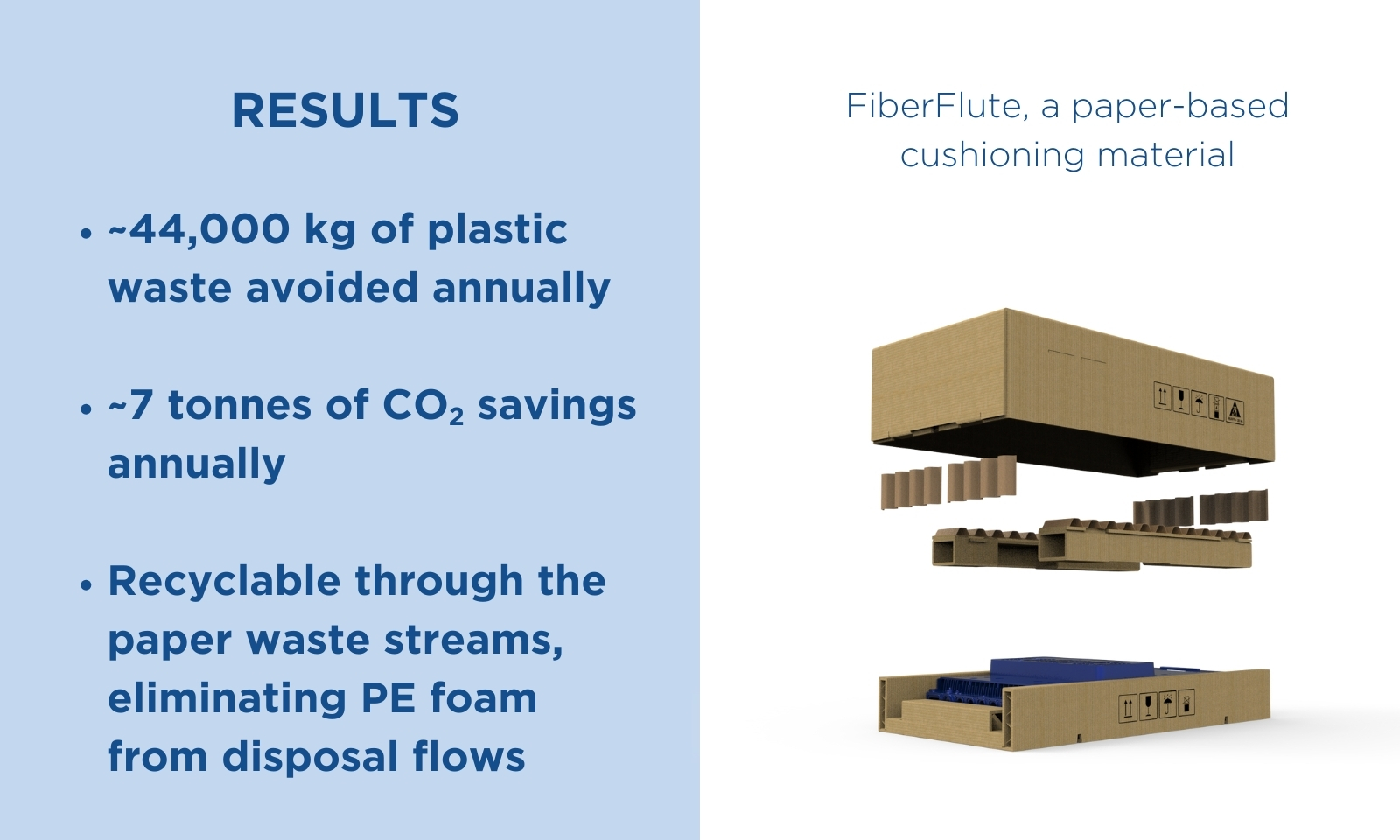
FiberFlute paper-based cushioning replaced PE foam while maintaining protection throughout transport, handling and final installation.
4. Match the Solution to the Type of Flow
The right solution depends on how equipment moves, how often it is handled, where it is unpacked, and what happens to the packaging afterward.
In Nefab’s experience, returnable packaging can work well in predictable, repeatable loops supported by an effective collection system. Recyclable fiber-based packaging or cushioning may be more suitable for one-way deliveries to remote installation sites. Consolidation and standardization can improve efficiency when products from different sources must reach an installation site together.
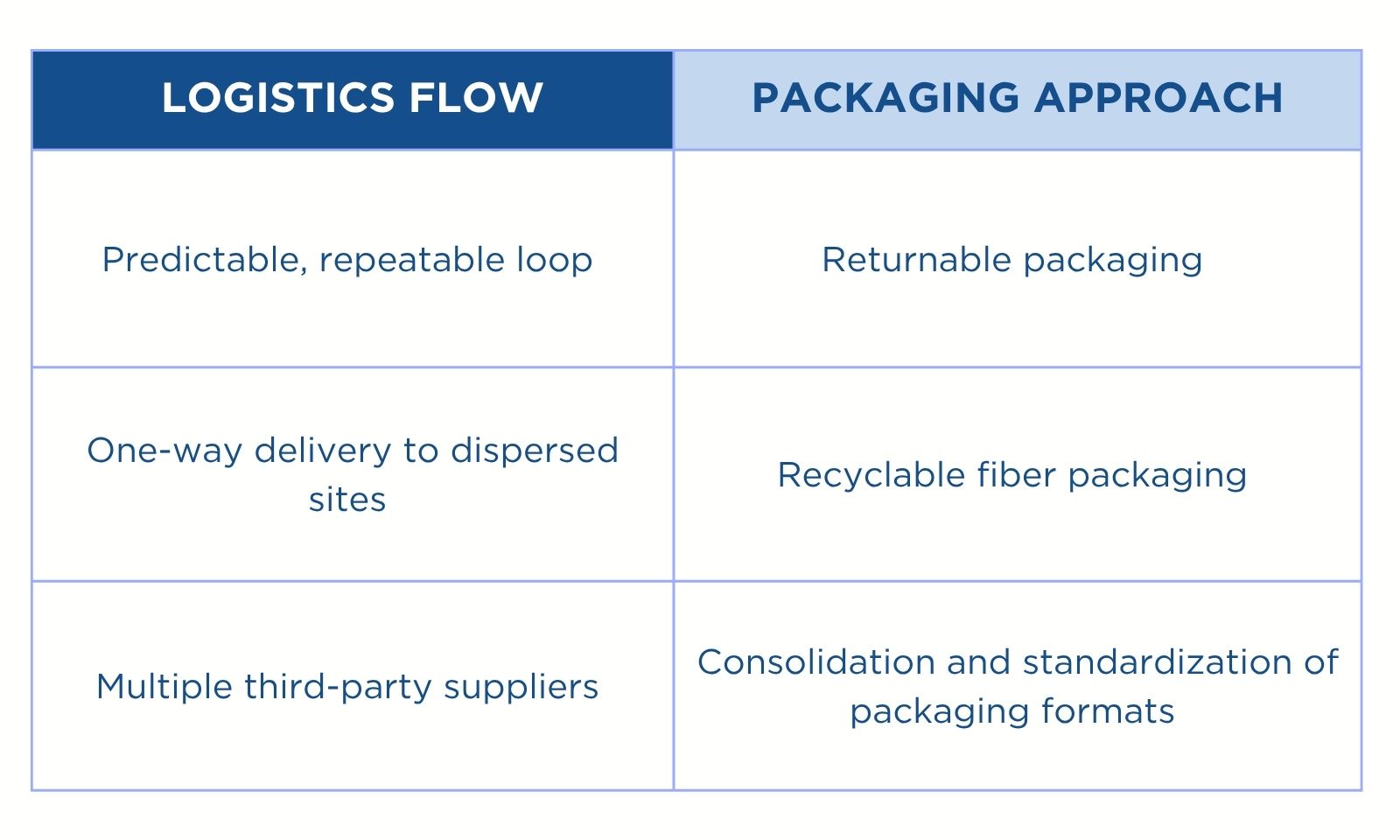
There is no single packaging solution for every telecom deployment. The starting point should be the logistics flow.
By looking at inbound, outbound and recovery flows as one connected system, telecom companies can reduce waste, use transport capacity more effectively and keep sensitive equipment protected throughout its journey.
We save resources in supply chains for a better tomorrow.
Want to learn more?
GET IN TOUCH
Contact us to learn more about our smart and sustainable solutions.
LEARN MORE
Solutions for the Telecoms Industry
Sustainable Protection for Your Equipment
GreenCalc
Nefab’s own certified calculator measures and quantifies financial and environmental savings in our solutions
Global Supply & Local Services
With over 250 engineers across more than 30 locations, working together in a global network, you can count on us for your next packaging project.