- News & Insights
- 2026
- How Manufacturers Can Regionalize Operations Without Sacrificing Consistency
Manufacturers Can Regionalize Operations Consistently
As manufacturers regionalize operations to improve resilience and responsiveness, maintaining consistency across multiple locations is becoming increasingly challenging. Balancing global standards with local execution can help companies reduce complexity, maintain consistency, and improve supply chain performance.
The Shift from Global Efficiency to Supply Chain Resilience
For decades, global supply chains were designed around efficiency. Manufacturing was concentrated where costs were lowest, suppliers were consolidated, and products moved through highly optimized global networks.
Today, the priorities are changing. Geopolitical uncertainty, changing trade policies, transportation disruptions, and growing customer expectations are forcing manufacturers to rethink how supply chains are structured. Recent research shows that 62% of manufacturers are nearshoring or localizing operations to improve resilience and reduce risk1. This illustrates how quickly supply chain priorities are evolving. As a result, resilience and responsiveness have become just as important as cost.
Relocating factories is only part of the equation. Packaging, engineering support, inventory management, and logistics capabilities often need to evolve alongside manufacturing footprints.
A recent semiconductor packaging project illustrates how manufacturers are navigating this transition.
62% of manufacturers are nearshoring or localizing operations to improve resilience and reduce risk.
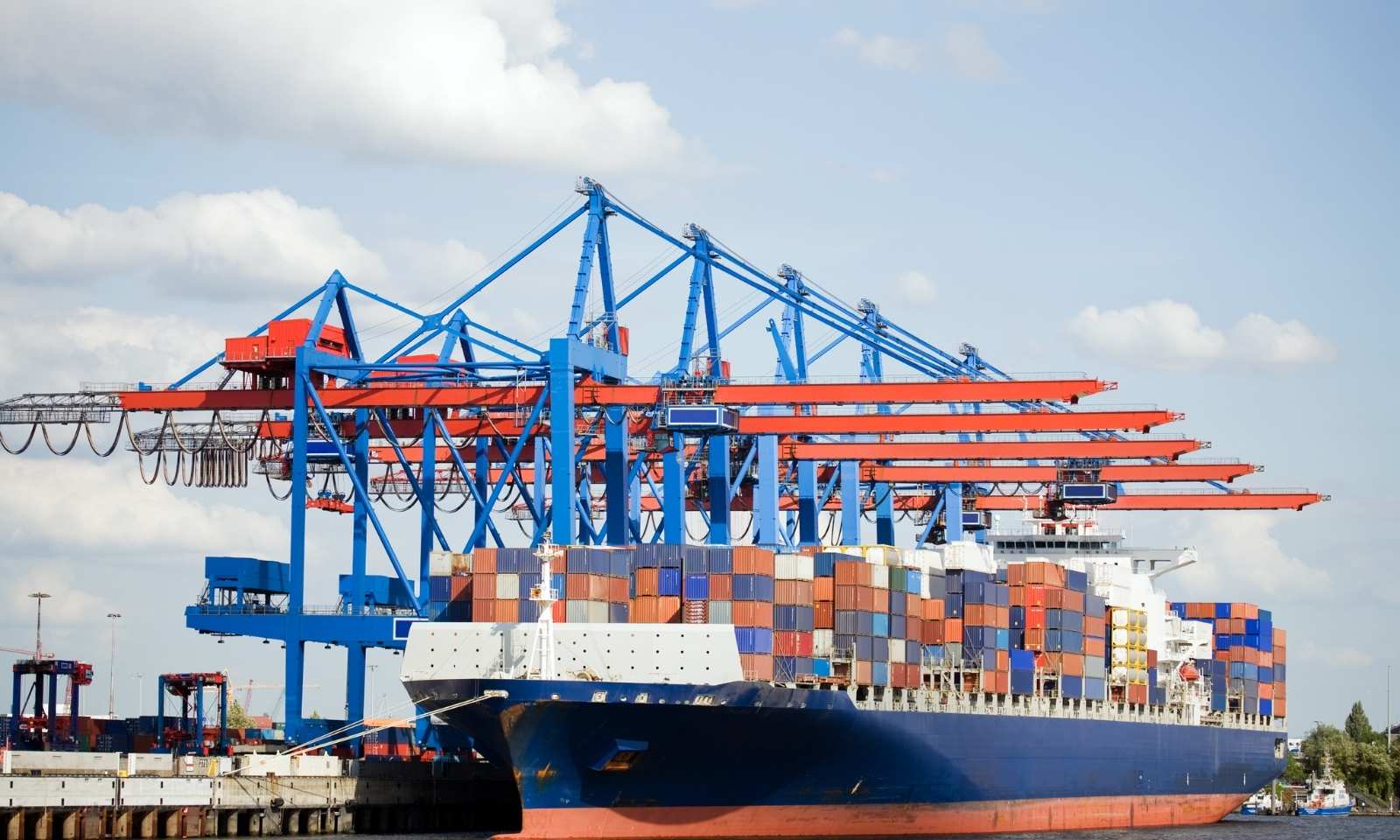
Localizing Production Without Losing Consistency
A semiconductor contract manufacturer operating in Singapore faced an unexpected challenge. While production was based in Singapore, the packaging used to ship its products was still being produced in the Netherlands. Empty packaging had to travel thousands of miles before it could be filled, increasing costs, extending lead times, and generating unnecessary emissions.
Localizing packaging production seemed like the obvious solution. The difficulty was that the original design relied on a specialized white-coated plywood that was not available locally. Any alternative would need to meet the same technical and quality requirements as the original design.
Working across teams in Europe and Asia, Nefab transferred technical knowledge, sourced an equivalent local material, and ensured the packaging met the same specifications and performance requirements.
The result was a locally produced solution that delivered results such as:
- A 97% reduction in transportation-related CO₂-eq emissions
- An 18% reduction in annual packaging costs
- Improved lead times
More importantly, the customer was able to localize supply without changing the packaging standard used across its operations.
You can read the full case here.
“The goal wasn't simply to produce packaging locally. It was to deliver the same quality, performance, and safety, using locally available materials.”
The Growing Challenge of Local Execution
The semiconductor example reflects a broader trend. Companies are increasingly investing in regional supply chains to improve responsiveness, reduce risk, and strengthen business continuity.
At the same time, supply chain management has become the top strategic priority for 68% of trade professionals, nearly double the figure reported just one year earlier2. Yet many companies discover that regionalization introduces new challenges. Materials available in one region may not exist in another. Supplier networks vary, regulatory requirements differ, and even testing methods and sustainability reporting frameworks can change across markets.
The risk is that local adaptations gradually create multiple versions of the same packaging solution, increasing complexity instead of reducing it. Proximity alone does not create resilience. Companies also need to ensure that products are built, packaged, and supported to the same standards wherever operations take place.
In other words, successful regionalization requires both local execution and global alignment.
“Regional manufacturing doesn't require different standards. It requires different ways of achieving the same standards locally.”
Why Global Standards Matter More Than Ever
The balance between local execution and global consistency is becoming increasingly important as manufacturers redesign supply chains around resilience. The ability to source packaging, engineering expertise, and inventory closer to manufacturing operations is becoming an increasingly important advantage as companies seek to shorten lead times and improve responsiveness.
This challenge is becoming increasingly common as manufacturers redesign supply chains around resilience. The ability to source packaging, engineering expertise, and inventory closer to operations can improve responsiveness, but only if performance, specifications, and sustainability requirements remain aligned across regions.
The fastest supply chains are not necessarily those that travel the shortest distance. They are the ones that combine local responsiveness with global consistency, enabling companies to adapt quickly while maintaining performance across markets.
We save resources in supply chains for a better tomorrow.
Want to learn more?
GET IN TOUCH
Contact us to learn more about our smart and sustainable solutions.
LEARN MORE
Sustainable Solutions
Engineered packaging for sustainable supply chains
GreenCalc
Nefab’s own certified calculator measures and quantifies financial and environmental savings in our solutions
Global Supply & Local Services
With over 250 engineers across more than 30 locations, working together in a global network, you can count on us for your next packaging project.