As manufacturers prepare for the Packaging and Packaging Waste Regulation (PPWR), which begins to apply across the EU from August 20261, much of the sustainability conversation focuses on materials: replacing plastic, increasing recycled content and improving recyclability.
Yet for industrial packaging, sustainability often depends on engineering decisions that extend beyond material selection and influence a solution’s environmental performance throughout its lifecycle.
Sustainability Requires a Lifecycle Perspective
No single packaging attribute determines whether a solution is “sustainable”. Packaging made from recycled material may not automatically have the lowest environmental footprint, just as a reusable solution only delivers environmental benefits if return logistics are efficient enough to support it.
Understanding these trade-offs requires a lifecycle perspective. Lifecycle assessment tools such as GreenCalc help quantify those trade-offs by evaluating materials, transportation, logistics flows and end-of-life scenarios together. This broader perspective highlights the important role engineering plays in determining a packaging solution's environmental performance.
Good Engineering Creates Better Sustainability Outcomes
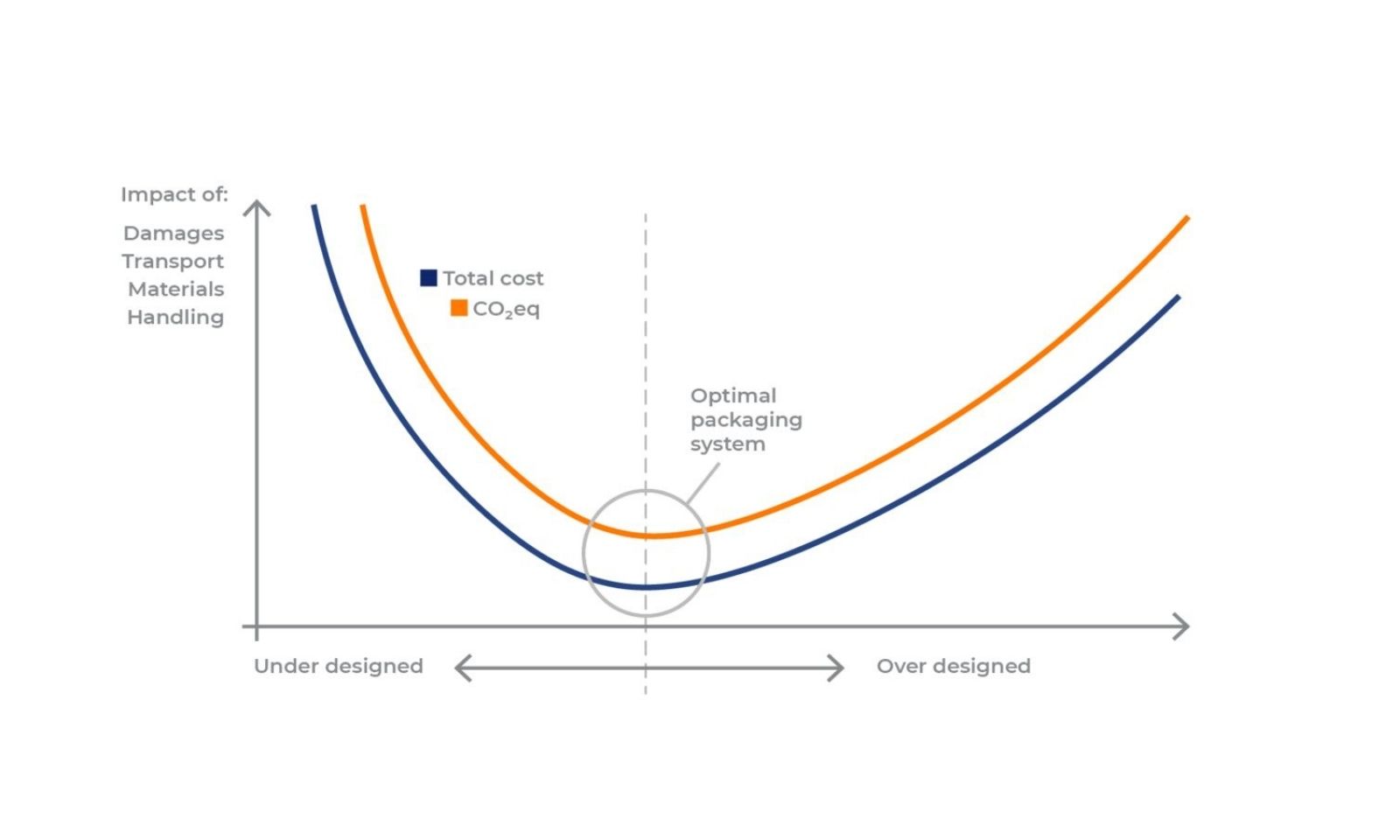
Non-optimized transport packaging carries a sustainability cost that is easy to underestimate. Solutions that are too heavy, oversized, non-stackable, or unable to ship flat or collapse waste space and add weight across every shipment, driving up emissions in ways that often exceed the impact of product damage itself. In addition, products that compromised or damaged can require remanufacturing, expedited transport, additional handling, and, in many cases, disposal of both the product and its packaging. Ultimately, addressing both inefficiencies together is essential to lowering the true environmental impact of packaging.
That's why the most sustainable packaging solution isn't necessarily the one made from the "greenest" material. It's the one engineered to provide the required level of product protection while minimizing environmental impact across its entire lifecycle.
This is why every packaging project should begin with one question: How can we provide the protection the product needs while designing the packaging as efficiently as possible?
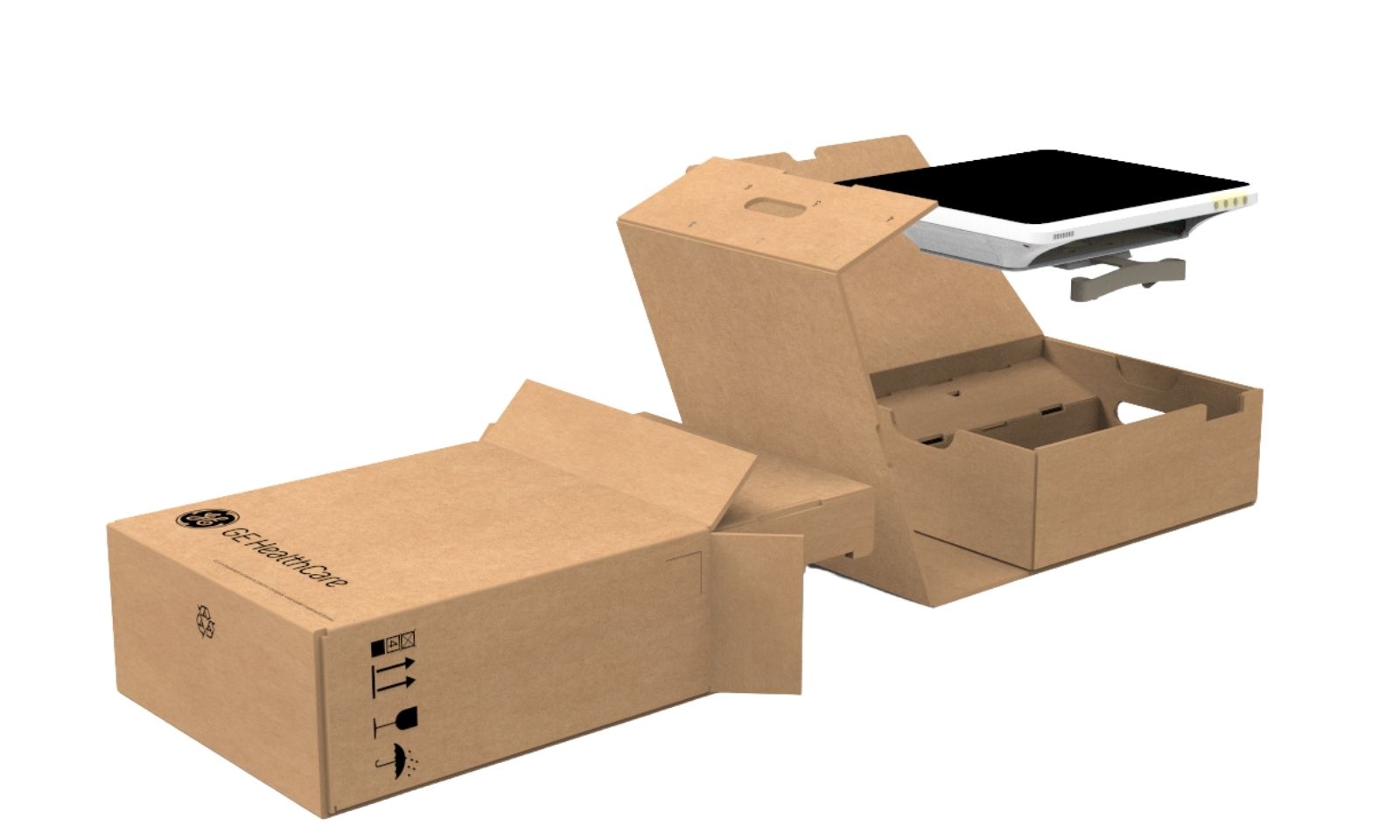
Redesigning the packaging system enabled this medical monitor solution to reduce package size by 34%, fit 50% more products per shipment and lower CO₂ emissions by 23%, without compromising product protection. Read the full customer case here.
The Biggest Opportunities Are Often Hidden in the Design
The medical monitor example highlights a broader principle: many of the decisions that shape a packaging solution's environmental performance are made during the design process.
Packaging design determines whether:
• a heavy industrial component really requires a wooden crate or can be protected with a lighter engineered solution
• multiple product variations can share the same packaging design
• returnable packaging makes economic and environmental sense between production sites
• packaging dimensions allow an additional unit to fit on every pallet or trailer
• a product can be protected with less material through smarter structural design
Designing and Testing Before Building
Today's packaging engineers can evaluate packaging performance much earlier in the design process. Digital simulation makes it possible to evaluate compression, vibration, impacts, and transportation loads before the first prototype is built.
This allows engineers to refine the design early, reducing material use and the number of prototype iterations before moving to physical testing. Physical testing remains essential to validate real-world performance, but with much of the optimization already completed virtually, development becomes faster, less expensive, more efficient, and generates less material waste.
Looking Beyond Materials
As manufacturers work to reduce emissions while improving supply chain resilience and efficiency, packaging decisions are becoming increasingly strategic. This broader perspective also aligns with the direction of industry initiatives such as the Packaging and Packaging Waste Regulation (PPWR), which emphasizes not only material choices but also waste prevention, reuse and optimized packaging design.
Material selection will always remain an essential part of sustainable packaging. However, it is only one of many engineering decisions that determine packaging’s environmental performance. The greatest opportunities to reduce environmental impact often emerge by optimizing the entire packaging solution, from structural design to logistics, transportation and end-of-life performance.
We save resources in supply chains for a better tomorrow.
Want to learn more?
GET IN TOUCH
Contact us to learn more about our smart and sustainable solutions.
LEARN MORE
Sustainable Solutions
Engineered packaging for sustainable supply chains
GreenCalc
Nefab’s own certified calculator measures and quantifies financial and environmental savings in our solutions
Global Supply & Local Services
With over 250 engineers across more than 30 locations, working together in a global network, you can count on us for your next packaging project.