• 能源
  • 行業
  • Insights

新聞與見解

Sustainability in the Energy sector

How packaging solutions can support the energy sector in becoming cleaner and more sustainable?

Practical packaging and logistics strategies to support renewable growth, installation success, and measurable CO2-eq reduction.

Key takeaways

  • Renewable investments and grid upgrades are accelerating; heavy-duty energy equipment needs durable, light, and easy-to-handle packaging for remote sites
  • Installation success depends on synchronized arrivals, clear labeling, and packaging engineered for long storage and harsh conditions
  • Digitalization with track & trace improves visibility and can reduce cycle time and total flow costs
  • LCA quantifies environmental and financial savings, guiding better packaging and logistics choices

Major shifts are underway that will reshape the global energy system by 2030. Clean technology investment is surging, especially in wind and solar, requiring significant logistics and packaging innovation for remote, harsh environments.

Peter Bjelovuk, Global Energy Segment Director at Nefab, shared what the industry should do to prepare for the growth. “The transition to clean energy is happening worldwide and it’s unstoppable. It’s not a question of ‘if’, it’s just a matter of ‘how soon’, said Bjelovuk. Latest research projects the electricity generation in energy market will reach 28.34 tKWh by 2024, which is an annual growth rate of 4.84%. Follow along as we discuss what the energy leaders must do today to prepare for tomorrow’s challenges.

"The transition to clean energy is happening worldwide and it’s unstoppable. It’s not a question of ‘if’, it’s just a matter of ‘how soon."
Peter Bjelovuk

Utility-scale solar and wind growth scenario illustrating increased capacity and logistics demands.

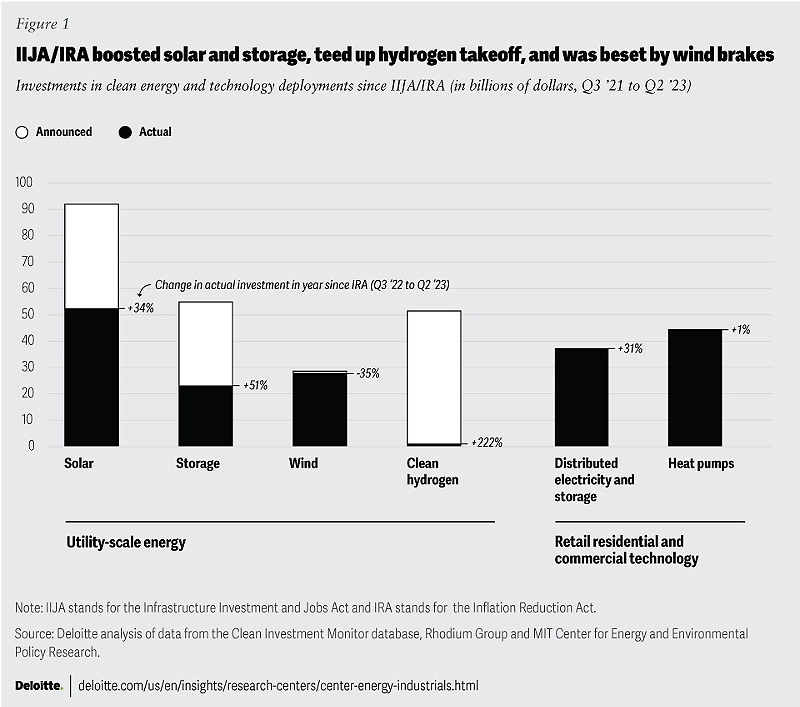
By the end of 2023, the US Energy Information Administration expects utility-scale solar installations to more than double compared to 2022, to a record-breaking 24 GW, and wind capacity to rise by 8 GW, as indicated by a Deloitte’s report.

Global renewable growth and logistics implications

In line with the COP28’s call to “transition away from fossil fuels in energy systems and achieve net zero by 2050”, the global push for renewables is imminent. “The global need for energy is soaring due to population growth, urbanization and industrialization. It will happen both in developed economies, which transition from old type to green type of energy, as well as in developing economies, which energy demands are growing”, explained Bjelovuk.  

A good example for the transition into renewable energy in the industrialized countries is the U.S. where the Energy Information Administration announced by the end of 2023 utility-scale solar installations to more than double compared to 2022, to a record-breaking 24 GW, and wind capacity to rise by 8 GW. On the other hand, in the developing countries – like India – the push for urbanization is driving the energy evolution, where the middle class is rapidly growing and expected to reach 40% by 2031. In order to answer this growing demand, the energy grid capacity needs to be upgraded to meet higher demands in the future. This is where the challenges start, as transporting heavy-duty power generators to remote destinations in changing weather conditions is a difficult test both from the logistics and engineering point of view.  

Installation-ready packaging and services for remote sites anywhere in the world  

For smooth installation all the parts need to arrive at the same time and in good shape, need to be properly packed and labelled for easy unpacking and handling. Some of the shipments will wait for months until the installation is complete, so the packaging also needs to ensure long storage times under changing weather conditions. Therefore, an optimal packaging for delivering the precious energy cargo to its destination must be durable yet light and easy to open and handle. This is where Installation Management Solutions come into play, as it includes illustrated packing instructions, load and site plans and connectivity service for earliest shortage reporting, event alerts and change management. “As a result, Installation Management Solutions save customer capital and resources, while protecting the brand reputation”, explained Bjelovuk. 

A good packaging example that meets these stringent demands are nail-less, flat packed boxes made either from wood or plywood, for heavy duty and medium-duty products, that take up minimal storage space and are very easy to handle. Thanks to their strong but lightweight design from qualified wood sources, the boxes are well-suited for valuable, heavy-weight and fragile goods aimed for long-term storage. Depending on the product specification, the packaging should include separate boxes within to make sure all the parts are easily visible, accessible and sequenced in a way that simplifies installation. Using wood packaging from qualified sources demonstrates strong commitment both to the environment and to customers”, added Bjelovuk. 

Digitalization and connected logistics for sustainable energy supply chains

Another important topic that energy companies should consider before the installation stage is investing in digital services for better visibility and control of their valuable flow. By adding track & trace functionality to each packaging, energy companies are able to monitor the real-time location in transit. “This data can increase efficiencies as well as reduce the total costs of the flows, sometimes even up to 65% cycle time”, added Bjelovuk. 

Track and trace dashboard showing real-time shipment visibility for energy equipment in transit.

Measuring impact with LCA to cut cost and CO2-eq

Last, but not least, for transforming global energy supply chains it’s vital to use Life Cycle Analysis (LCA) tools, that track and quantify all financial and environmental data related to packaging and logistics. By measuring the emissions, waste, returnability, and different types of materials in all flows, energy companies can see how much they could save by switching to an alternative packaging solution that ensures that optimal conditions are met during packaging shipment. “Until today we calculated over 3000+ LCAs across various industries. On average, we are reaching double digit savings both financially and sustainably, in line with energy industry’s environmental goals”, added Bjelovuk. 

Track & trace platform provides real-time location in transit and can increase efficiencies as well as reduce costs of the flows, sometimes even up to 65% cycle time. 

Answering tomorrow's challenges today 

It is true that the energy segment is undergoing a major transition towards cleaner, more sustainable energy sources globally and that will bring many changes, including doubling the energy efficiency. However, by combining sustainability and traceability, anything is possible. With the right tools the energy companies can choose the most optimal packaging and logistic solutions, successfully track their assets anywhere in the world in real time and significantly reduce their CO2-eq emissions.  

How is Nefab supporting energy sector in this regard? “In 2024, we will focus both on expanding our services globally to offer same-quality support to all our customers regardless of their location, and further developing our digital services portfolio. We believe that last mile optimization is the missing puzzle that the energy sector needs to take advantage of because it can cost the company its reputation”, summarized Peter Bjelovuk.  

我們在供應鏈中節約資源,創造更美好明天  

想瞭解更多資訊? 

聯繫我們 

Contact us to learn more about our sustainable solutions driving supply chains forward. 

瞭解更多資訊 

Solutions for the Energy Industry 
Integrated Packaging and Logistics Solutions for the Energy Sector 

GreenCalc 
Nefab’s own certified calculator measures and quantifies financial and environmental savings in our solutions 

Sustainable Solutions 
Engineered packaging for sustainable supply chains 

我們的最新消息和見解
  • 2025.12.02 半導體

    How to Protect Semiconductor Manufacturing Equipment in Transit?

    Semiconductor manufacturing leaves no room for error. Every process, every component, every piece of equipment operates within microscopic tolerances, and that precision can’t be compromised once the machines leave the cleanroom. Yet, shipping high-value parts such as electrostatic chucks, pedestals, or showerheads introduces a whole new layer of risk.

  • 2025.11.26 Customer Cases

    Sustainable Packaging for Wafer Shipping

    Semiconductor manufacturing is a complex process that can be broadly divided into two main phases: the front-end process and the back-end process. Nefab partnered with a leading semiconductor manufacturer to optimize the packaging solution for shipping wafers between its front-end and back-end facilities, achieving significant financial and environmental benefits.

  • 2025.11.25 能源

    Why Shipping Grid Equipment Is a Different Kind of Challenge and How to Overcome It?

    Why Shipping Grid Equipment Is a Different Kind of Challenge and How to Overcome It?